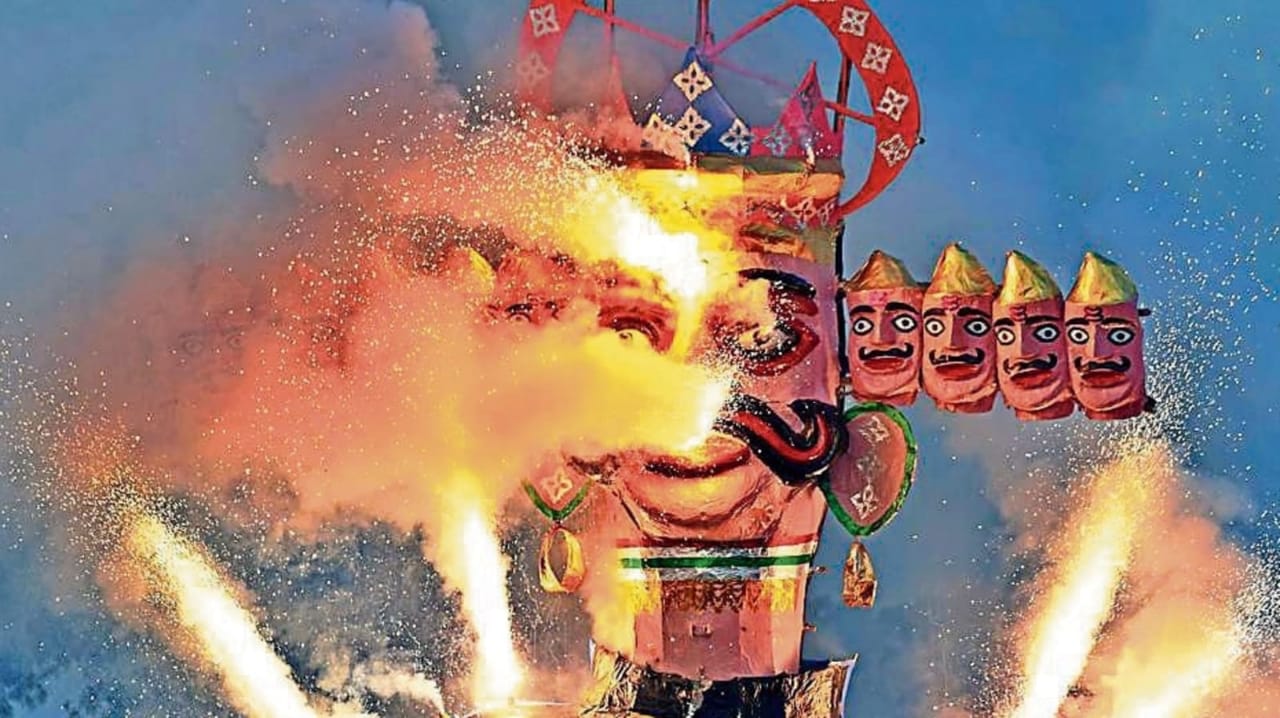
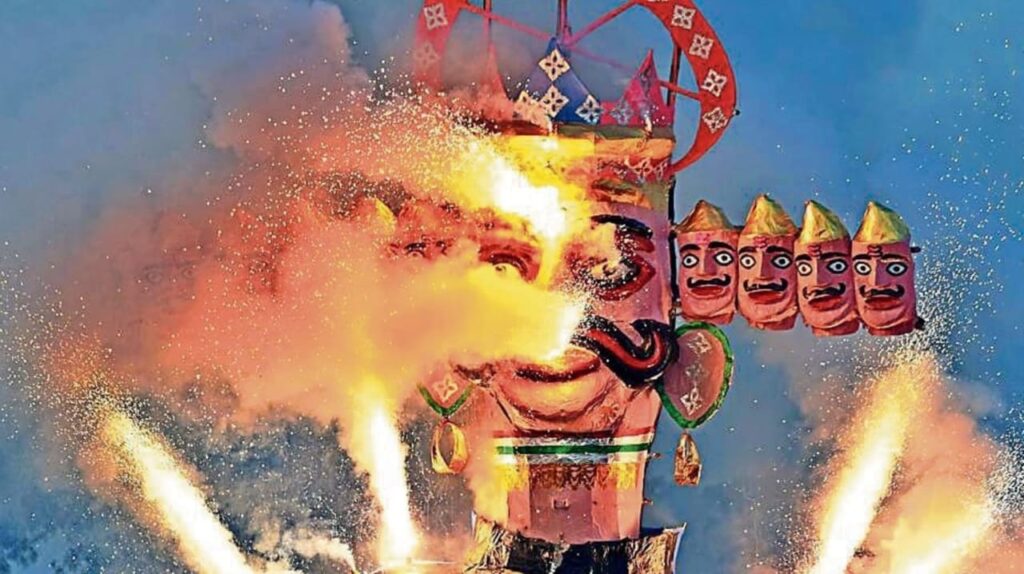
In a tradition that spans centuries, millions of people across India and various parts of the world gather every year to celebrate the victory of good over evil during the festival of Dussehra. At the heart of these grand festivities is the symbolic burning of an effigy representing Ravana, the legendary demon king from the epic, Ramayana.
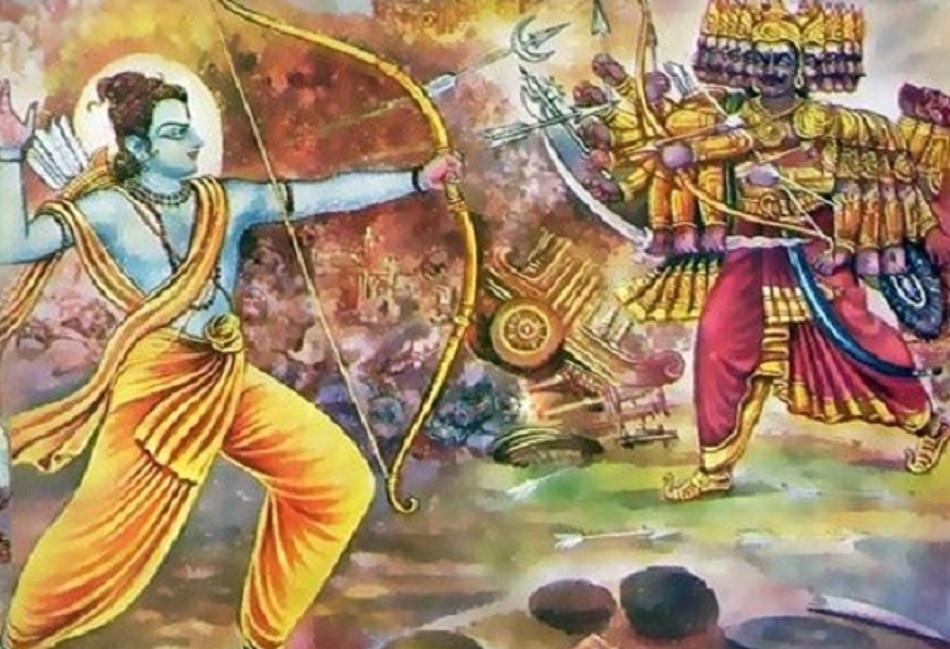
This age-old tradition is deeply rooted in Hindu mythology and has been a pivotal part of Dussehra celebrations. According to Hindu scriptures, Lord Rama, an incarnation of the god Vishnu, waged a war against Ravana to rescue his wife, Sita, who had been abducted by the demon king. After an epic battle that showcased the triumph of righteousness and virtue, Lord Rama finally defeated Ravana, ultimately leading to his demise.

The burning of Ravana effigies on Dussehra signifies the destruction of evil forces and the victory of good. It serves as a reminder that no matter how powerful evil may seem, it will eventually be vanquished by the forces of righteousness and truth. The practice also embodies the hope for a better future, free from the influence of negative energies and malevolence.
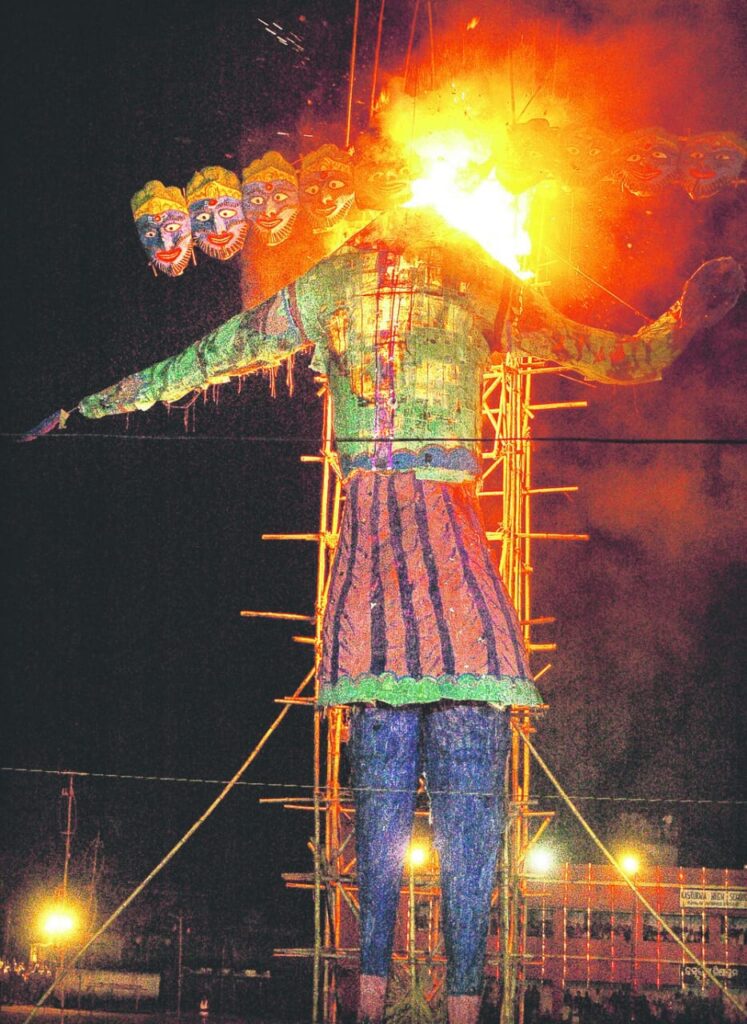
Communities across India come together with great fervor to construct elaborate effigies of Ravana, along with his brother Kumbhakarna and son Meghnad, and set them ablaze in open fields or town squares. Spectacular firework displays, music, and dance performances accompany the burning, making it a visually stunning and emotionally charged event for both participants and spectators.
The act of burning Ravana is not just a religious ritual; it is a cultural spectacle that unites people from all walks of life. Families, friends, and neighbors gather to witness the event, reinforcing the message of unity and harmony in the face of adversity. In some regions, it’s also customary to exchange gifts and sweets, further cementing the sense of community.
Dussehra, which falls on the tenth day of the Hindu calendar month of Ashwin, typically occurs in September or October. This annual ritual of burning Ravana effigies stands as a vivid reminder of the eternal battle between good and evil and the eventual victory of light over darkness. It remains a cherished and widely celebrated tradition, highlighting the enduring power of righteousness and the hope for a brighter tomorrow.
Presentation: Rising Utkal